Tax Credits and Deductions You Should Know About in Canada

Every Canadian taxpayer should understand the various tax credits and deductions available to them. While federal and provincial tax rates determine how much you owe, credits and deductions directly reduce your tax liability, allowing you to keep more of your hard-earned money. This guide covers the most important tax credits and deductions in Canada, how … Read more
Understanding CPP, EI, and Payroll Deductions in Canada

When Canadians receive their first paycheque, one thing quickly becomes clear: the amount deposited into their bank account is noticeably lower than their stated salary or hourly wage. The difference comes from a series of payroll deductions that are automatically taken from earnings before employees receive their net pay. While federal and provincial income taxes … Read more

How Much Is $120,000 After-Tax in Alberta

If you earn $120,000 per year in Alberta, your estimated take-home pay is approximately $88,781 per year, or about $7,398 per month after federal and provincial taxes, CPP, and EI deductions. Your effective tax rate is approximately 26.02%, meaning that for every dollar you earn, about 26 cents go toward taxes and mandatory contributions. This … Read more

How Much Is $80,000 After-Tax in Alberta

If you earn $80,000 per year in Alberta, your estimated take-home pay is approximately $61,173 per year, or about $5,098 per month after federal and provincial taxes, CPP, and EI deductions. Your effective tax rate is approximately 23.53%, meaning that for every dollar you earn, about 24 cents go toward taxes and mandatory contributions. This … Read more

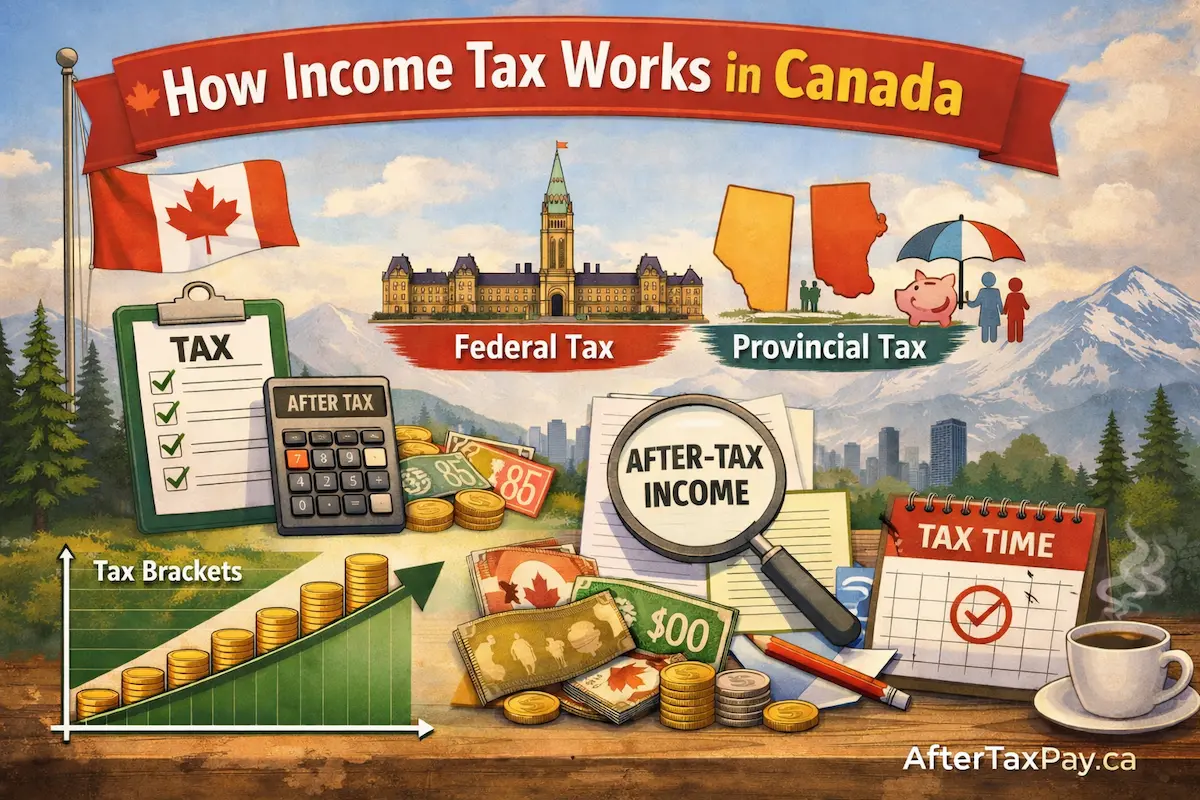
How Income Tax Works in Canada

Income tax is one of the most significant financial obligations for Canadians, yet many people find the system confusing. Between federal and provincial taxes, multiple tax brackets, and payroll deductions such as CPP and EI, understanding exactly how taxes affect your income can be difficult. At its core, Canada’s income tax system is designed to … Read more

How Much Is $100,000 After-Tax in Alberta

$100,000 After Tax in Alberta

If you earn $100,000 per year in Alberta, your estimated take-home pay is approximately $74,982 per year, or about $6,248 per month after federal and provincial taxes, CPP, and EI deductions. Your effective tax rate is approximately 25.02%, meaning that for every dollar you earn, about 25 cents go toward taxes and mandatory contributions. This … Read more

How Much Is $150,000 After-Tax in Ontario

$150,000 after tax in Ontario

If you earn $150,000 per year in Ontario, your estimated take-home pay is approximately $105,950 per year, or about $8,829 per month after federal tax, Ontario tax, CPP, and EI deductions. Your effective tax rate is approximately 29.37%, meaning that for every dollar you earn, about 29 cents go toward taxes and mandatory contributions. This … Read more

How Much Is $110,000 After-Tax in Ontario

$110,000 After Tax in Ontario

If you earn $110,000 per year in Ontario, your estimated take-home pay is approximately $81,258 per year, or about $6,771 per month after federal tax, Ontario tax, CPP, and EI deductions. Your effective tax rate is approximately 26.13%, meaning that for every dollar you earn, about 26 cents go toward taxes and mandatory contributions. This … Read more

How Much Is $40,000 After-Tax in Ontario

$40,000 After Tax in Ontario

If you earn $40,000 per year in Ontario, your estimated take-home pay is approximately $32,883 per year, or about $2,740 per month after federal tax, Ontario tax, CPP, and EI deductions. Your effective tax rate is approximately 17.79%, meaning that for every dollar you earn, about 18 cents go toward taxes and mandatory contributions. This … Read more

How Much Is $80,000 After-Tax in Ontario

$80,000 After Tax in Ontario

If you earn $80,000 per year in Ontario, you move firmly into upper-middle income territory. After federal tax, Ontario tax, CPP, and EI deductions, your estimated take-home pay is approximately $60,479.58 per year, or about $5,040 per month. At this income level, you are entering a higher marginal tax bracket compared to lower salary ranges, … Read more